How to Build Independent Income Without Being on Social Media
You can build meaningful independent income without becoming an influencer or constantly posting on social media—even if you're in a demanding full-time leadership role.
For executives and established professionals, your existing network may actually be a much more valuable starting point than strangers on the internet.
That matters because building independent income isn’t necessarily about quitting your job, replacing a $250K+ salary, or building an enormous business. You may only need a handful of the right clients.
Marketing and social media are not the same thing
Let’s get one thing straight: if you want people to hire you, you do need to market what you do.
But marketing does not mean you have to post on LinkedIn 5 times a week, make Reels, become TikTok-famous, or otherwise turn yourself into an influencer.
When I first started Embrace Change, I grew through small-scale workshops promoted through friends, real-world communities, and networks I was already part of.
I also had a referral system from day one. Depending on the situation, people could receive a cash bonus or free sessions for sending someone my way.
One client ended up referring more than TEN other clients.
None of that required a huge social media following.
And if you’ve already spent 10, 15, or 20+ years building a career, you have something I didn’t have when I first started: years of professional relationships.
Former colleagues. Former bosses. Clients. Vendors. Alumni. Professional associations. Industry relationships.
Your existing relationships WILL be a much more valuable starting distribution channel than strangers on the internet.
Do the math before you worry about building an audience
This is where I think a lot of established professionals accidentally make independent income feel much harder than it needs to be.
You’re not necessarily trying to replace your entire salary and benefits package.
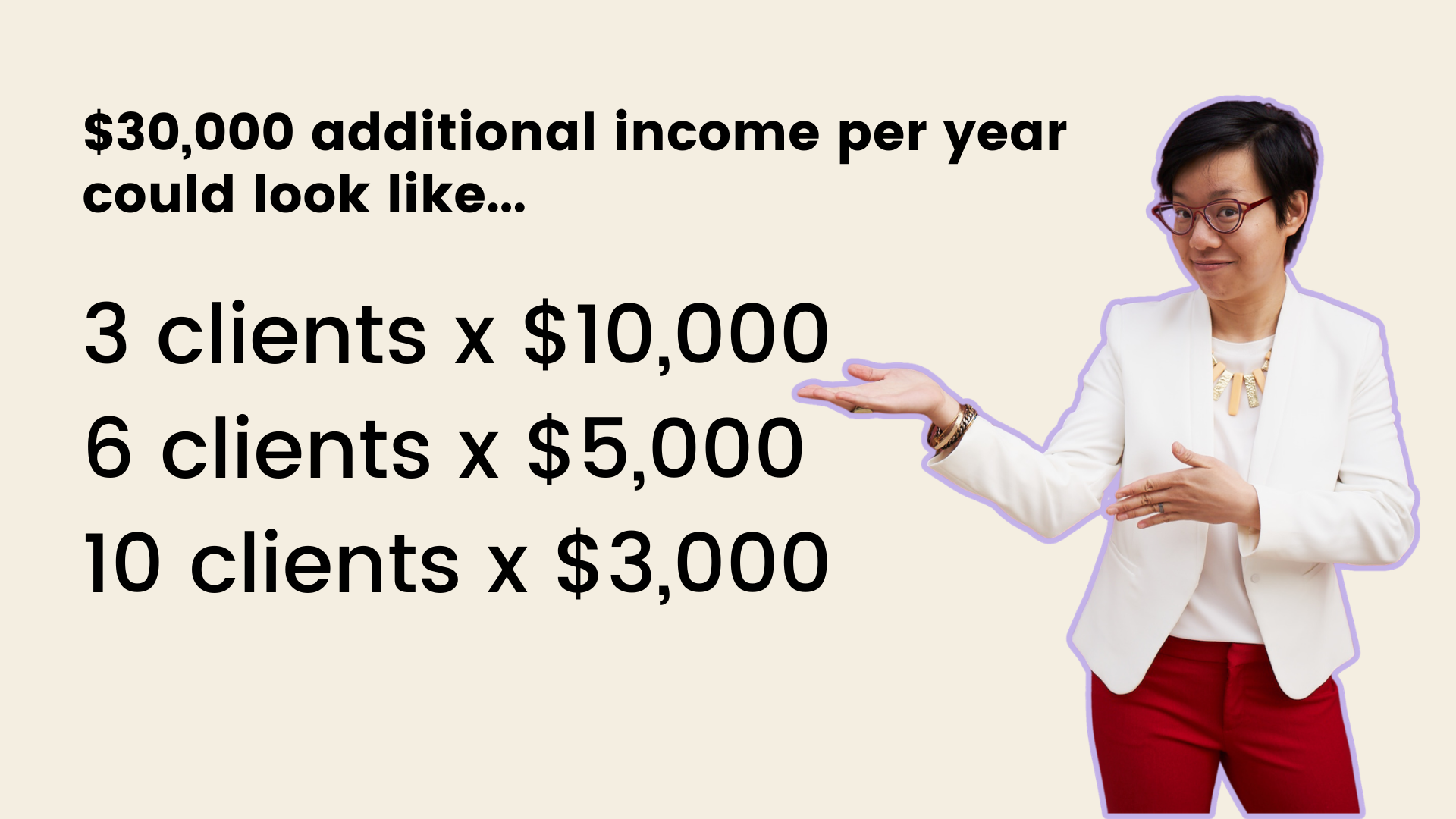
Say your initial goal is to generate an additional $30,000 a year independently.
That could look like:
3 clients at $10,000 each.
6 clients at $5,000 each.
10 clients at $3,000 each.
Depending on your expertise and what you sell, it could potentially be one client.
I have a longtime client who built an independent practice alongside a full-time leadership role. This person is also a primary caregiver and breadwinner in a family with two kids and deliberately protects time for creative work.
Their practice?
Five clients.
Just 5.
And some of those were 5-figure engagements.
That’s the point: you don’t necessarily need 50 clients.
You certainly don’t need 50,000 followers.
You need a handful of the right clients paying appropriately for your expertise.
No social media still requires a client-acquisition system
Here’s the part people sometimes want to skip.
Deciding not to use social media does NOT mean you can be invisible and magically expect clients to appear.
You still need a system for generating opportunities.
For the client I just mentioned, much of that came through relationships they had cultivated over years: being a good colleague, manager, mentor, and trusted person in their professional ecosystem.
Your own system could include staying consistently in touch with your network, generating referrals, speaking, participating in alumni or professional associations, or building strategic partnerships.
The specific combination can vary.
But somehow, the right people need to know:
This is what I do.
This is who I help.
This is how you can hire me.
You don’t need everyone to know.
You need enough of the right people to know.
Start with the people who already trust you
So when someone tells me, “I’d love to build independent income, but I do NOT want to be on social media,” my response is:
Great. Don’t.
Social media is a distribution channel. It is not a prerequisite for independent income.
Instead, start with different questions:
Who already knows and trusts my work?
Who understands the value of my expertise?
Who could hire me?
Who could refer me?
And what system can I build for staying connected to those people and consistently creating opportunities?
Especially for established professionals, the answer may already be much closer than you think.

Want to build economic optionality beyond your full-time role?
This is part of my Income Independence series for executives and established professionals who want to develop income beyond one employer and one paycheck—without building an entire second full-time career.
Next, watch: